
Interpreting a fight

Interpreting a fight

Glosario_Traducciones

One of my most difficult moments as an interpreter involved a fight between a Minister of the Colombian national government and some very respected academics during a meeting at one of Bogotá’s fanciest hotels.

The academics did not want to fight. The Minister did. This is the story.

A very unexpected increase in volume

I was interpreting a very normal meeting at a government-owned hotel near Bogotá’s downtown district. It was early in the day, I’d had my two coffees and was settling in to work. There were about 20 people sitting around a long table and conversing about Colombian public policy for early childhood while eating breakfast. One of those working breakfasts – as the interpreter, I work, everyone else gets to eat breakfast. The academics were from one of the most famous universities in the world and were politely recommending that the Minister of Education, who was the special guest at the meeting, increase the nation’s investment in early childhood education. The academics made a very strong argument that investing in this population would lead to exponential growth for Colombia’s economy when they reach adulthood.

Despite the logic behind this thinking, the Minister didn’t like being told what to do. While Colombians are known for being strong, tough and unafraid of conflict, this Minister really took it to the next level. After being given this recommendation, she stood up and started yelling at the academics about how hard her job was and how everyone asked her for money that she didn’t have. She was aggressive, furious and acting like an angry teenager who had her phone confiscated.

“Why is the Minister screaming at us?”

The academics turned and looked at me, as the only person who could speak English in the room, their frightened eyes asking me, “why is the Minister screaming at us?”. I tried to make my eyes say, “this is not normal and I apologize on behalf of the nation of Colombia and its beautiful people”, but they probably just said “I’m as scared as you are”.

I instantly faced a conundrum. Do I yell into my interpreting microphone too? Do I translate the swear words that peppered each sentence? Do I convey her aggressive tone? After a moment’s thought, I decided to maintain my regular relaxed style and speed and decided to omit the swear words, providing the decency and professionalism that the Minister severely lacked.

The tirade ended with her repeating the question, “What the $%&^* do you expect me to do when we have no money?”. She finally stopped the rant and finished her coffee. The academics were in shock. The Minister gathered up her things immediately and left the room without saying goodbye to anyone.

A suitable end for the screaming Minister

Thankfully, we had a number of other meetings and events during the week and no one else screamed at the visiting academics. When the Minister was fired from her job by Colombia’s President a few months, I breathed a sigh of relief on behalf of Colombia’s children and young people, and anyone who worked at the Ministry of Education.

ONG Traducciones provides interpreting for high level meetings and avoids screaming and swear words. For more information about this service, please click here.


What is a human translation?

What is a human translation?

Glosario_Traducciones

A human translation is the opposite of a machine translation (MT). It is a translation carried out 100% by a human translator.

Before the arrival of Google Translate and DeepL, all translations were human translations. We didn’t have any other options because the technology didn’t exist. 

However, now that machine translations (MT) are so prevalent, clients have a choice. They can select a human translation or an MT as their preferred modality.

As you can imagine, there are many benefits to human translations. In fact, our company now has a number of contracts with clauses specifying that we can only provide these clients with human translations. This is a particular focus in Bogotá, Colombia, and is also a trend in the rest of Latin America and the Caribbean. So why would you choose a human translation?

The benefits of human translations

  • Machine translations feed the text that they translate into their algorithm, improving the software while at the same time violating the privacy of the data contained in the text. Many clients prefer that the content of their documents is not publicly available. When you put a document into translating software, it instantly becomes the property of these platforms.
  • A human translation is exclusively produced by the mind of the translator. As a result, it will always read more naturally and have a better flow than a machine translation. It is almost always more interesting to read than a text produced by software and then edited by a translator.
  • In a machine translation, the software isn’t perfect. This means that it’s easy to lose a footnote, a bullet point or a sentence. These are errors that the translator doing the post-translation editing (PTE) might not always correct.
  • Better translations. MTs add the most commonly-used word for a specific term. A human translator knows, or can investigate, the most accurate translation for that term, which is not always the most obvious choice.

Human translations will never go out of fashion. They are particularly sought after in the translation of books, technical reports and academic journal articles due to the complexity of these types of documents.

ONG Traducciones offers human translations. You can find out more about this service by clicking here.

Translating the untranslatable – sayings in Colombia

Translating the untranslatable – sayings in Colombia

Glosario_Traducciones

Like many countries, Colombians have many sayings and terms that everyone in the country understands but are almost impossible to translate into another language. Whether it’s because of the historical isolation of the country, or that special spark in the souls of Colombian people, many sayings in Colombia can only really be understood by natives. These phrases and words, affectionately known as being a part of the «Chibchombiano» language (Colombian instead of Spanish), represent a huge challenge for any interpreter. With the goal of putting a smile on your face, and to give you an insight into one of the conundrums faced by interpreters working in Colombia, we have prepared a short list of some of our favorite «Chibcha» sayings.

  1. «A soldier warned never dies in war». This saying comes up a lot in conversations about disaster risks and social problems. However, if I interpret it literally into English, the client will look at me with a confused face because we weren’t talking about the armed conflict. One client leaned over and asked “is a warning enough? Maybe a weapon too?”.
  2. «And this miracle?”. An expression used when you haven’t seen someone for a while, which could be years or a couple of days. In English, miracles are reserved for when something inexplicable and magical happens about once a century, like the apparition of a deity. In Colombia, the miracle of seeing someone you have previously met happens every day.
  3. «They talk out of their elbows». If someone talks a lot, which is a common thing in Colombia, they say that their additional words have to come out through their elbows because their mouth is already so busy talking.
  4. «Every child comes with a loaf of bread under his arm». In Colombia, children are considered a blessing for each family and they are treasured. This saying sees the arrival of a baby as a harbinger of good fortune, no matter the economic situation of the parents, which is why they are bringing the metaphorical bread.
  5. «Weeds never die». Maybe it is because of all the violence that the country has experienced, but in Colombia there are many sayings about bad people. This one refers to the injustice of how bad people seem to live a lot longer than good people.
  6. «Tree that grows crooked, branches will never straighten». There are many sayings in Colombia that allude to the negative aspects of life, especially corrupt politicians who steal public funds. This phrase describes the general belief that these people will never learn to act decently.
  7. «More dangerous than a cough with diarrhea». A wonderful example of Colombian black humor. There are a lot of sayings about risks and dangers in this country, which is a consequence of the historically high levels of crime generated by drug trafficking and the armed conflict. A number of them draw on Colombians’ general love of slapstick and gross-out humor.

ONG Traducciones offers interpreting and written translations in English and Spanish and we do our absolute best with Chibchombiano. You can find out more about these services here.

Glossaries for translating and interpreting

Glossaries for translating and interpreting

Glosario_Traducciones

When I first start a translating or interpreting job for a new client, it can be like finding your way through a forest without a torch. Hard. You don’t know what terms the client uses, nor whether they want UK or USA spelling in English. When it’s a technical document or a meeting that uses very specific terminology, it gets even more confusing. That is why I always suggest we build a glossary to ensure the success of the translation or interpreting job.

What is a glossary?

A glossary is a list of words that the client uses frequently in their documents / meetings. Next to these words there is the preferred translation of each term in the target language. While this sounds very simple, it can take a while to build an accurate glossary with a client. In our case, it’s like a small and specific Spanish to English or English to Spanish dictionary focused on the client’s areas of work.

How do you build a glossary?

The first step is to identify key terms and phrases. For me, this doesn’t happen until I finish the first draft of a written translation or when I receive the preparatory documents for an interpreting job. I take note of the words that I’m not sure how to translate, then send it to the contact person at the client with a request that someone with expertise reviews my draft glossary. They usually make changes, which I then either add to the written translation or incorporate into the glossary I will use on an interpreting job.

It’s important to note that a glossary is an organic document. It is usually updated after every translation or interpreting job and expands over time. Some clients have their own pre-prepared glossaries, which is very helpful, but most of them don’t. When I get feedback from a client after a job, I always open up their glossary and make the relevant changes so that my work will be more accurate in the future.

Why do you need a glossary?

Quality. A glossary makes sure that what you are translating or interpreting is correct in the target language for the client. It also allows you to incorporate regional differences depending on the job. A translation or interpreting job in Bogotá, Colombia can be very different compared to translation/interpreting in Panama or Peru, but if you have a glossary for each country (for one client we have 7 glossaries for the 7 countries they work in, and each of them has a different term for the translation of “children”), then that quality is going to be maintained with each job that you do.

For a translator or interpreter, glossaries are heaven. They provide certainty where there was previously none. If you work with a translator or interpreter, start building your glossary today.

ONG Traducciones provides written translation and interpreting services. You can find out more about our company here.

The 8 signs that you found a good official translator in Bogotá, Colombia

The 8 signs that you found a good official translator in Bogotá, Colombia

Traducciones_oficiales

The 8 signs that you found a good official translator in Bogotá, Colombia

  1. Responds to your WhatsApp message or email within a couple of hours.
  2. Sends you a draft version of your official translations so that you can proofread the documents before they are printed, stamped and signed.
  3. Your official translations come with a certification on each page that includes the translator’s full name, ID number and signed declaration that they are an official translator.
  4. They put the words «Traducción oficial – Official translation» in the header of each page in your official translation.
  5. They give you advice on how to authenticate or apostille your official translations.
  6. They offer a discount when there are a significant number of documents that require official translation.
  7. You can pick up your documents physically from their business or request that they are sent to you via Servientrega.
  8. They’re fast!

ONG Traducciones provides official translations that are high quality, accurate and competitively priced. You can find out more about this service here.


Translation fails from Spanish to English

Translation fails from Spanish to English

ONG_Traducciones_Fail

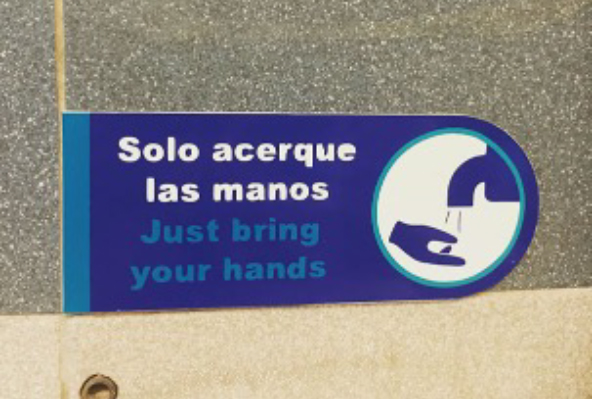
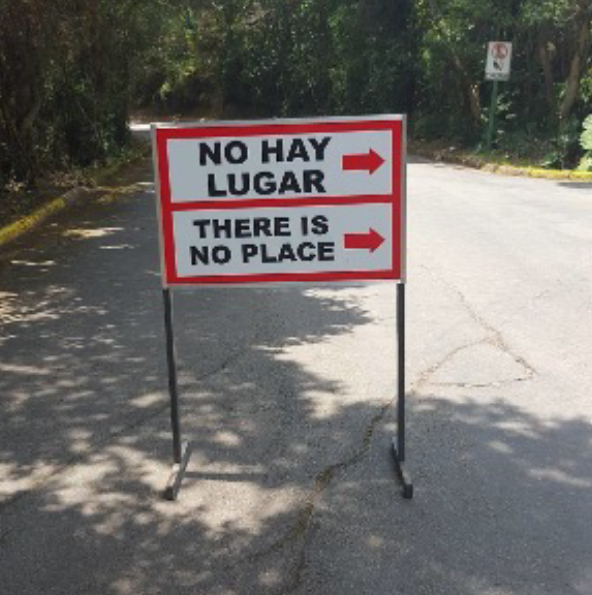
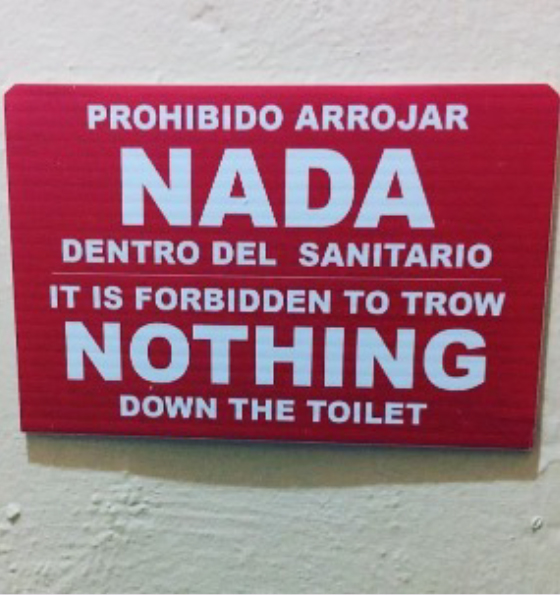
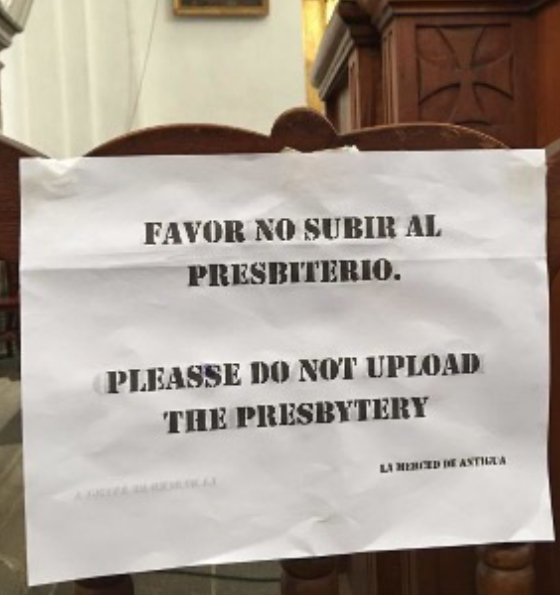
I love translation fails. They make me laugh out loud but they also remind me how important human translators are who can decipher possible conundrums and take into account the local context.

Here are some of my favourite translations fails from Spanish to English:

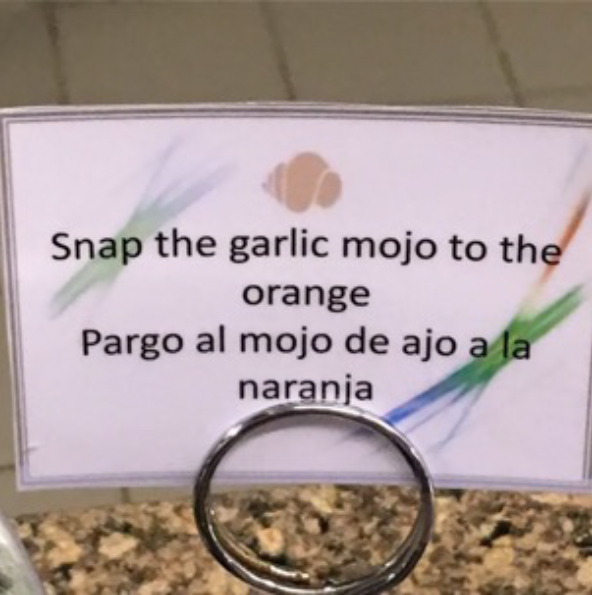
1. Snapper is a delicious fish, known as pargo in Spanish. But AI doesn’t know that.

ONG_Traducciones_Fail_1

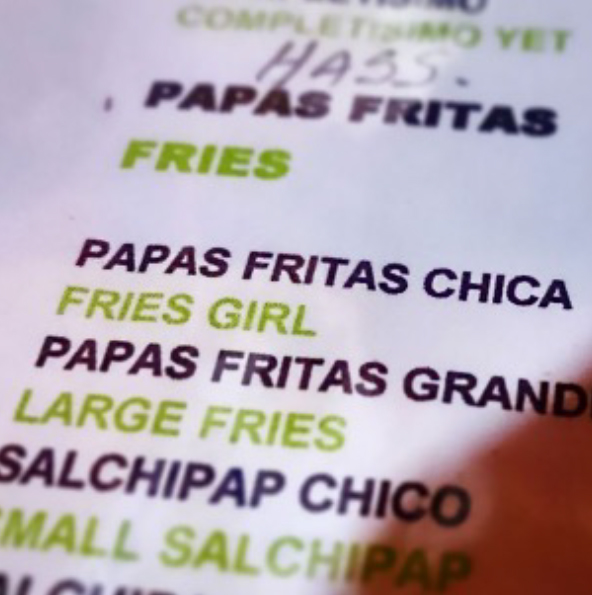
2. Sometimes you might feel like a small garlic fries, but who doesn’t want to meet the fries girl at the same time?

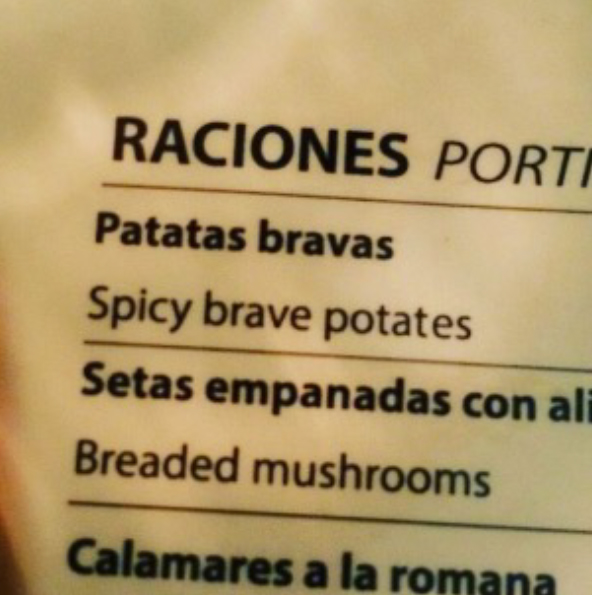
3. Spicy and brave do go together.

4. Who wants skim milk when this tasty alternative is available?

5. Good advice for every occasion.

6. Sometimes signs get philosophical.

7. I hope this sign isn’t at a funeral home.

8. Make your contribution to the toilet please.

9. You can always find an upload in a strange place.

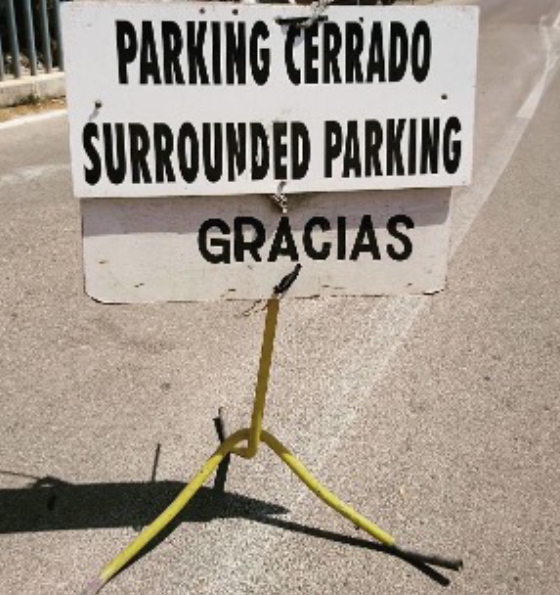
10. Surrounded by… cars?

ONG Traducciones offer successful translation and interpreting services in Bogotá, Colombia. To find out more about our work, click here.