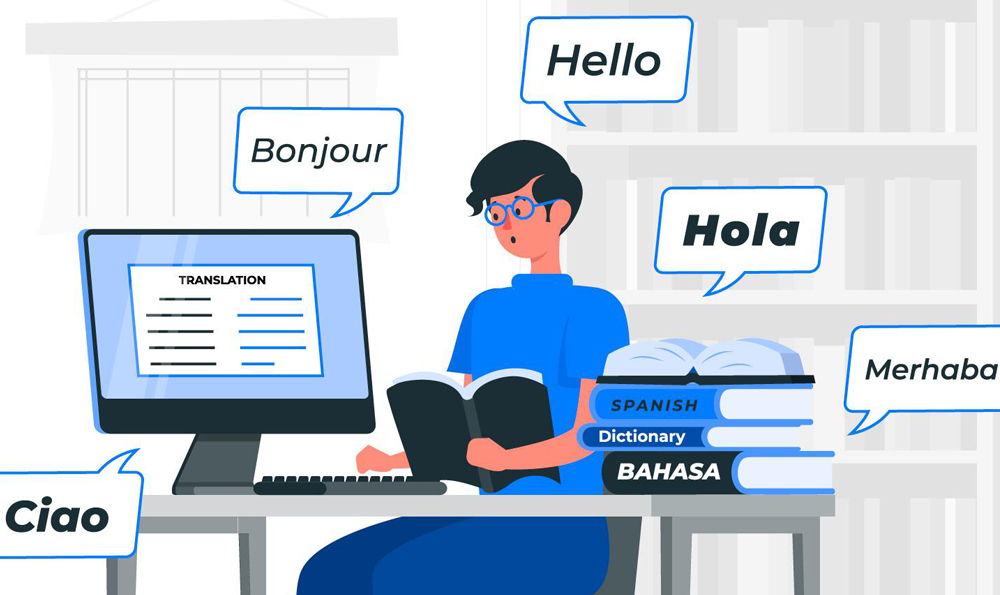
What is a machine translation (MT) and post-translation editing (PTE)?

What is a machine translation (MT) and post-translation editing (PTE)?

AT_vs_EPT

A recent trend in the translation industry has been the growth of machine translations and post-translation editing. While these terms might sound very technical, they are actually straightforward. There has been significant growth in machine translations and demand for post-translation editing in the last few years in Bogotá, Colombia and other major cities in Latin America and the Caribbean.

Machine translation

A machine translation (MT) is when you use technology, specifically Artificial Intelligence (AI), to translate a document. For example, an MT is when you use Google Translate or DeepL to change text from one language into another.

While this might sound like we will never need a human translator again, the reality is quite different. The quality of a machine translation is not the same as a human translation.

Why an MT will always be low quality

First of all, if a document is poorly written in the original language, then the machine translation will also be poorly written, just in another language. In addition, the structures of languages vary significantly, so while the MT might be able to translate a document, it will probably read as “clunky” or confusing in the target language. While the AI for translating has improved dramatically in recent years, and machine translations are much better than they were, you still need a human to “repair” a document after it goes through Google Translate or DeepL. This process is called post-translation editing.

Post-translation editing (PTE)

Post-translation editing is a fancy way of saying that a human being needs to “fix” a machine translation. This is not an easy task. It’s necessary because AI doesn’t translate sentences that are an accurate translation, read well and make sense in the overall context all at the same time. AI literally translates the content of the original document. This is why a machine translation is never perfect and usually requires a lot of post-translation editing.

PTE is a very specific skill and can’t be done by just anyone.

Why a translator must be the person who does post-translation editing 

  • You often need to check back to see what the text says in the original language in order to be able to decipher what needs to be edited in the MT.
  • There are many cases where text in the MT makes no sense. A translator with skills in PTE can transform that text so that it communicates the meaning of the text from the original language using clear and concise sentences.
  • The MT can “forget” to translate certain parts of a document. A human translator has to check the entire text and make sure that the MT has included everything, and if it hasn’t, make sure that it is part of the translated document.

There is a common perception among clients in the translations industry that PTE is “easy”. It isn’t. While it might initially save time and energy because the translator doesn’t have to physically type out the full translation, a PTE requires a significant amount of time to fix up the document so that it reads perfectly.

Reasons for using PTE

One of the advantages of PTE is that because the AI does the leg work and produces a very basic translation, the translator can spend more time on the editing process. This in turn increases the quality of the translation.

It is important to note that we are still a long way from the extinction of human translators in favor of machine translations. There is a clear consensus that post-translation editing will always be required to ensure that the final product is of the highest possible quality.

ONG Traducciones offers post-translation editing of machine translations. Please contact us by clicking here to find out more.
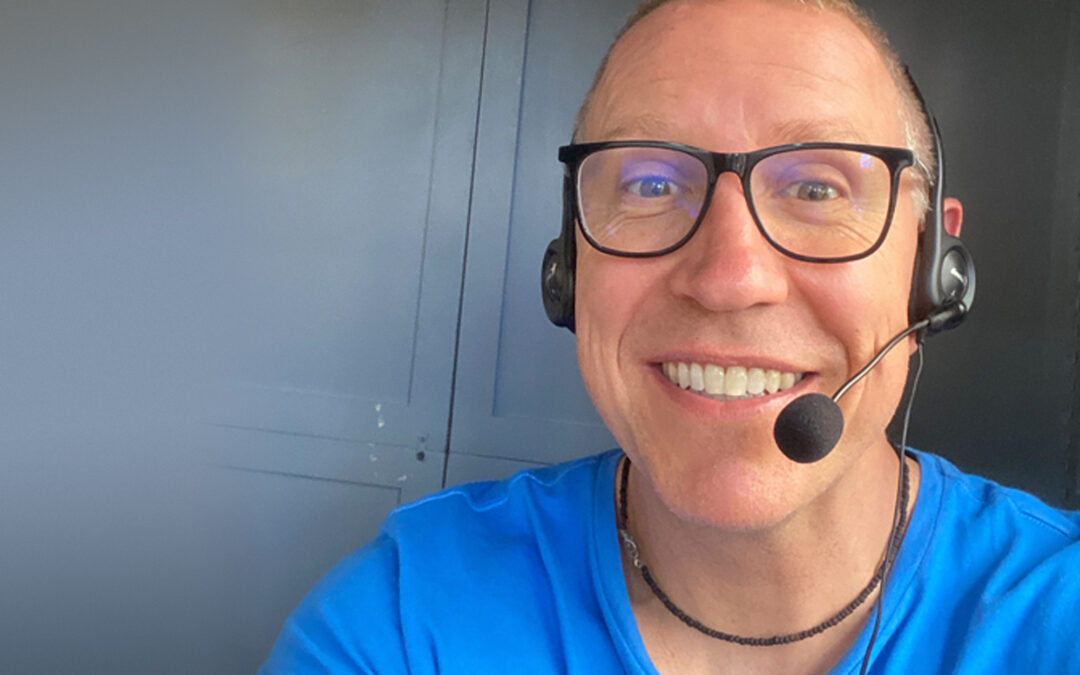
Invisible but essential: A day in the life of an interpreter

Invisible but essential: A day in the life of an interpreter

Interprete_Traducciones

While being an interpreter is definitely not as glamorous as showbusiness, it is a bit different to a normal office job, particularly in that many of us work for ourselves. Below is a normal day in the life of this interpreter working in Bogotá, Colombia.

Early morning

6am: Wake up. Well, slowly. Breakfast, shower, iron clothes (in Colombia you have to look your best). Extra coffee.

7am: Get on my bike and ride to a hotel or office tower. In Bogotá, this is usually in the north of the city.

7.45am: Leave my bike in a carpark so that it doesn’t get stolen off the street.

Before we start

8am: Upon arrival to the meeting room, my first port of call is always our wonderful team of technicians who arrive early to set up the booth, mixing desk, microphones and cables. I only ever have one question for them: “all good?”. If things are all good, as they usually are, I smile and thank them vociferously for their work. Our technicians are the most important people in the building, because they make it all happen.

8.05am: Find the contact person from the client and introduce myself. I ask them for a quick run down of the day’s events, if anything has changed from the agenda they sent me and get them to confirm what time we are starting.

8.10am: Get a coffee. In Colombia there is always coffee. It’s wonderful.

8.15am: Sit down in the booth and drink my coffee slowly. The booth is always at the back of the room and helps us soundproof what we do, so our voices only come through the headphones and not the room itself.

8.30am: My interpreting colleague arrives. The joy of speaking English with a fellow native speaker is only surpassed by the joy of sharing any gossip we might have about politics, our families and life in general.

8.40am: Mic and headphones test. My colleague always tells jokes instead of saying “testing, testing, 1, 2, 3”. She has the best jokes. The only joke I have is “what’s brown and sticky? A stick”.

8.45am: Introduce myself to the visitors who are our direct clients for the day. I always ask if it’s their first time in Colombia. If it is, I hold out my arms, smile and declare “welcome to Colombia!”.

Showtime!

9am: Start interpreting. Interpreters always take turns, doing shifts between 15 and 20 minutes we don’t get too tired (it’s an exhausting job). We keep track of the time with a stopwatch in the booth and always look for a suitable pause to achieve a seamless transition at the end of each shift.

11am: Morning tea. It’s always exciting to see what snack is served. Some days it’s amazing. Some days there is no snack.

11.15am: Keep interpreting.

Lunch

12.30pm: Lunch break. We usually sit with the visiting guests if no one else speaks English so that they don’t feel lonely. We also sit with our technical staff, because they are great. In a hotel or office, lunch can either be amazing or not so great. The good thing is that we always get lunch.

1.30pm: Back to interpreting. We load up on coffee to get over the post lunch sleepiness. Luckily, everyone else is sleepy after lunch so it’s generally a chilled vibe for the first hour.

3pm: Afternoon tea. Based on years of experience, you are much less likely to get a snack in the afternoon compared to the morning because people are often still full from lunch. Coffee is essential.

Almost there

3.30pm: Final session. Definitely the hardest of the day. Not because we are tired, but because everyone else is. This means that their sentences aren’t as well structured and are more difficult to interpret. Luckily, we are professionals, so we make them look great and ensure that everyone is enjoying high level communication.

5pm: End of the day. We sign off, and occasionally we get applause from the people at the meeting. It’s always nice to have your work appreciated.

5.01pm: Say thank you to our technical team for another flawless day of high quality sound.

5.05pm: Check in with the client and ask if they have any feedback.

5.10pm: Check in with the visitors we were interpreting for and give them tips and recommendations about what to see, do and buy in Bogotá if they have any time off before they leave.

5.15pm: Thank my colleague.

5.20pm: Pick up my bike and ride home. Bogotá traffic acts like a  meditative mind cleanse. You can only concentrate on one thing: survival.

6pm: Make it home. After talking all day, I generally try to be as silent as possible in the evening. Eat dinner, rest and get ready to do it all again tomorrow.

ONG Traducciones offers interpreting in Bogotá and the rest of Colombia. You can find out more about this service by clicking here.

Subtitles: small but important

Subtitles: small but important

Subtitulacion

Subtitles are everywhere these days. On YouTube, Netflix and videos on social media. They are essential for allowing us to watch videos, films and content made by people who speak a different language. But they are a relatively new invention.

History of subtitles

The first subtitles in the history of cinema were made in 1903 for the 19-minute short film “Uncle Tom’s Cabin”, a dramatization of a very famous book and play from the USA. At this time, cinema was silent, so what was known as “intertitles” were used so that the audience could know what the characters were saying. This involved first showing a shot of the actors, then cutting to a short piece of text with the characters’ lines.

Intertitles were famously used in the films starring Charlie Chaplin and allowed the audience to better understand the story, even though there was no actual dialogue.

When sound was added to films in the 1930s, the use of intertitles declined. Around this time a Norwegian inventor created a machine to stamp text on rolls of film, which led to the birth of subtitles.

With the globalization of cinema in the 1950s and 1960s, watching foreign films with subtitles became a very popular pastime. It wasn’t until the invention of the DVD that subtitles from different languages could be selected for the same movie. Personally, I realised how important subtitles were when I first started living in Bogotá, Colombia. I went to the nearest cinema to watch a local film and was so lost because obviously everyone in the audience except me spoke Spanish and I didn’t understand a thing.

Yellow subtitles?

I remember when I did my first subtitles more than 25 years ago. They were yellow, because that was the color of subtitles back then. Yellow was easier to read if you had bad reception from your TV antennae.

Nowadays we don’t really think about subtitles. They are such an important part of life, allowing us to watch Korean cooking shows, Turkish soap operas and German period dramas on streaming services.

How do you make good subtitles?

Subtitles are the translation of dialogue and titles in audiovisual content, but there are a number of factors that make good subtitles.

  1. Subtitles should very clearly translate the meaning of what it being said.
  2. We have a short time to read subtitles while they are on screen. This is why subtitles should use the least number of words possible.
  3. Even if you don’t understand the original language, if the actors are silent but the subtitles are changing, you know that they aren’t correct. Subtitles should be extremely precise in terms of their timing, allowing people to comprehend the original language while seeing relevant facial expressions and other body gestures on screen at the same time.
  4. Spoken speech is very different to written text in all languages. The words that people use change, as does the sentence structure. Subtitles should reflect spoken speech in the target language and be less formal than written text.

 You can find out more about the subtitling service offered by ONG Traducciones by clicking here.

What is a certified translation?

What is a certified translation?

traduccionesONG_certificadas

A certified translation is different to both an official translation and an apostilled translation.

This is one of the easier translations to obtain. A certified translation only requires that the person who translated the document certifies that it is a true and faithful translation of the original. In Bogotá, Colombia, I have been regularly asked to provide certified translations, particularly for clients undertaking visa or scholarship applications for migration or study in the USA and Europe.

A certified translation does not need to be done by someone with a qualification or any sort of certificate. The translator just needs to have a command of both languages (the original and the target language).

A text box is an easy solution

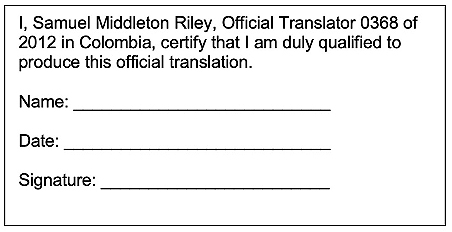
One of the easiest ways to certify a translation is to put a text box in the document like the one below:

traducciones_certificadas_cuadro

A certified translation must always be signed and dated by the person who did the translation.

ONG Traducciones offers certified translations, that are also official translations. You can find out more about this service by clicking here.

Portable or the booth? A guide for hiring interpreting equipment

Portable or the booth? A guide for hiring interpreting equipment

equipos_para_interpretacion

If you haven’t organized an interpreting job before, it might be a little tricky to know what you need to hire in terms of equipment. In Bogotá and the rest of Colombia, we get such a variety of jobs that sometimes we hire out different types of equipment for use in a single day. Below is a basic guide to interpreting equipment so that, depending on your event, you can identify what you need to hire.

Interpreting booth

An interpreting booth is the most commonly used equipment for events requiring interpretation. It has space for two interpreters to sit side by side and a glass window so that they can see who is speaking at the event. It is accompanied by a console, wireless microphones and however many headsets are required. The booth and other equipment are installed and monitored during the event by a technician, who is there to rapidly resolve any technical issues that might arise. The following types of events require an interpreting booth:

  • Large-scale (between 10 and 1,000 attendees)
  • Indoors
  • Usually one location (maximum two) during the day
  • Held in a relatively large meeting room, hotel or auditorium.
  • Meeting, conference, workshop or other formal-type event.

Portable equipment

Portable interpreting equipment consists of a transmitter (small microphone) and headsets (wired headphones with receivers that fit in a person’s pocket or can be clipped on their waistband). Portable equipment is used for events with the following characteristics:

  • Small scale (between 1 and 20 people)
  • Outdoors
  • Indoors in very small spaces that won’t fit a booth
  • Multiple locations
  • Field visits, cultural events, outdoor meetings, car trips and other informal activities

It’s also possible to use both types of equipment for a single event, depending on what is going to happen. The most important thing is to ensure that everybody is comfortable, the interpreters can do their job effectively and that communication flows between those involved in the event.

ONG Traducciones hires interpreting equipment in Bogotá and the rest of Colombia, with more information available by clicking here. We also offer interpreting for small and large events and you can find out more information about this service here.

Best platform for an online meeting that requires interpreting

Best platform for an online meeting that requires interpreting

Reunionenlinea_traduccion_simultanea

If it’s your first time organising interpreting for an online meeting in Colombia or any other country in the world, it can be a little difficult to know which platform you should use. Below is a quick guide to help you with your choice.

Zoom Pro

We have a winner! Zoom Pro is the only platform that allows you to have simultaneous interpreting. This means that you can turn on the Interpreting function, and when somebody is speaking in Spanish, people attending the meeting can select the English button and here the interpreter speaking in English at the same time. This reduces the length of the meeting, improves communication and makes the session much more enjoyable for everyone. While Zoom Pro has a significant annual subscription fee, you can also rent it for a day or numerous days from ONG Traducciones.

Microsoft Teams

Due to its popularity with organisations and businesses, many online meetings are held using Teams. However, the Teams interpreting function is currently only one-way. This means that there is a function for interpreting from the speaker’s language into another language but if that person wishes to respond to the speaker, there is no second channel to facilitate that conversation. As a result, Teams is not advisable for an online meeting that requires interpreting.

Google Meet

Because this is a free platform, Google Meet does not have an interpreting function and consecutive interpreting is required. This involves someone talking for around a minute in their language, then the interpreter repeats what they said in the other language, etc. As a result, the online meeting will go for at least double the amount of time and the interpreting will be less accurate as it relies heavily on the memory of the interpreter.

ONG Traducciones offers high quality interpreting for Zoom calls. You can find out more about this service here.