
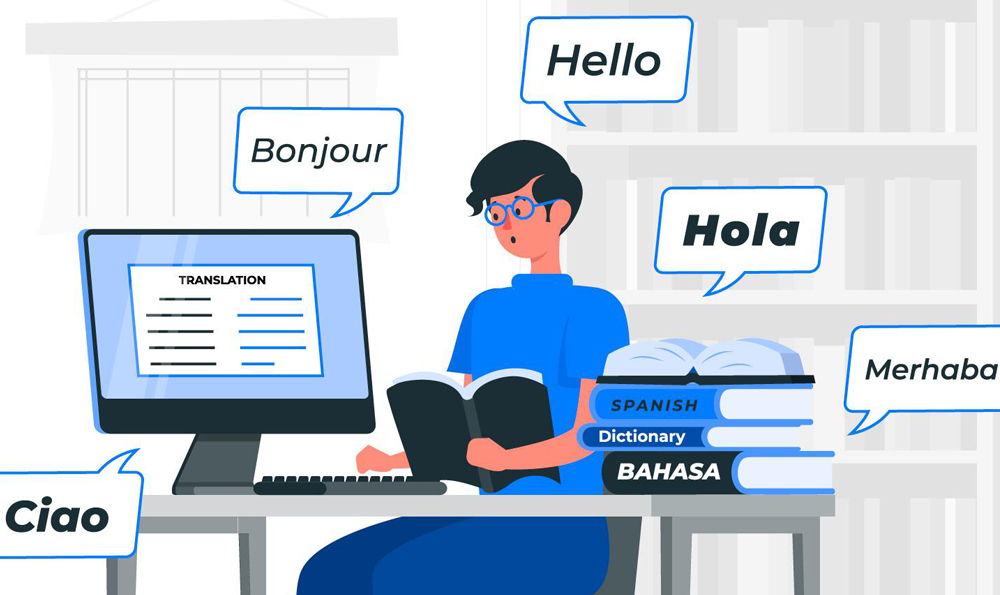
A recent trend in the translation industry has been the growth of machine translations and post-translation editing. While these terms might sound very technical, they are actually straightforward. There has been significant growth in machine translations and demand for post-translation editing in the last few years in Bogotá, Colombia and other major cities in Latin America and the Caribbean.
Machine translation
A machine translation (MT) is when you use technology, specifically Artificial Intelligence (AI), to translate a document. For example, an MT is when you use Google Translate or DeepL to change text from one language into another.
While this might sound like we will never need a human translator again, the reality is quite different. The quality of a machine translation is not the same as a human translation.
Why an MT will always be low quality
First of all, if a document is poorly written in the original language, then the machine translation will also be poorly written, just in another language. In addition, the structures of languages vary significantly, so while the MT might be able to translate a document, it will probably read as “clunky” or confusing in the target language. While the AI for translating has improved dramatically in recent years, and machine translations are much better than they were, you still need a human to “repair” a document after it goes through Google Translate or DeepL. This process is called post-translation editing.
Post-translation editing (PTE)
Post-translation editing is a fancy way of saying that a human being needs to “fix” a machine translation. This is not an easy task. It’s necessary because AI doesn’t translate sentences that are an accurate translation, read well and make sense in the overall context all at the same time. AI literally translates the content of the original document. This is why a machine translation is never perfect and usually requires a lot of post-translation editing.
PTE is a very specific skill and can’t be done by just anyone.
Why a translator must be the person who does post-translation editing
- You often need to check back to see what the text says in the original language in order to be able to decipher what needs to be edited in the MT.
- There are many cases where text in the MT makes no sense. A translator with skills in PTE can transform that text so that it communicates the meaning of the text from the original language using clear and concise sentences.
- The MT can “forget” to translate certain parts of a document. A human translator has to check the entire text and make sure that the MT has included everything, and if it hasn’t, make sure that it is part of the translated document.
There is a common perception among clients in the translations industry that PTE is “easy”. It isn’t. While it might initially save time and energy because the translator doesn’t have to physically type out the full translation, a PTE requires a significant amount of time to fix up the document so that it reads perfectly.
Reasons for using PTE
One of the advantages of PTE is that because the AI does the leg work and produces a very basic translation, the translator can spend more time on the editing process. This in turn increases the quality of the translation.
It is important to note that we are still a long way from the extinction of human translators in favor of machine translations. There is a clear consensus that post-translation editing will always be required to ensure that the final product is of the highest possible quality.
ONG Traducciones offers post-translation editing of machine translations. Please contact us by clicking here to find out more.










0 comentarios